

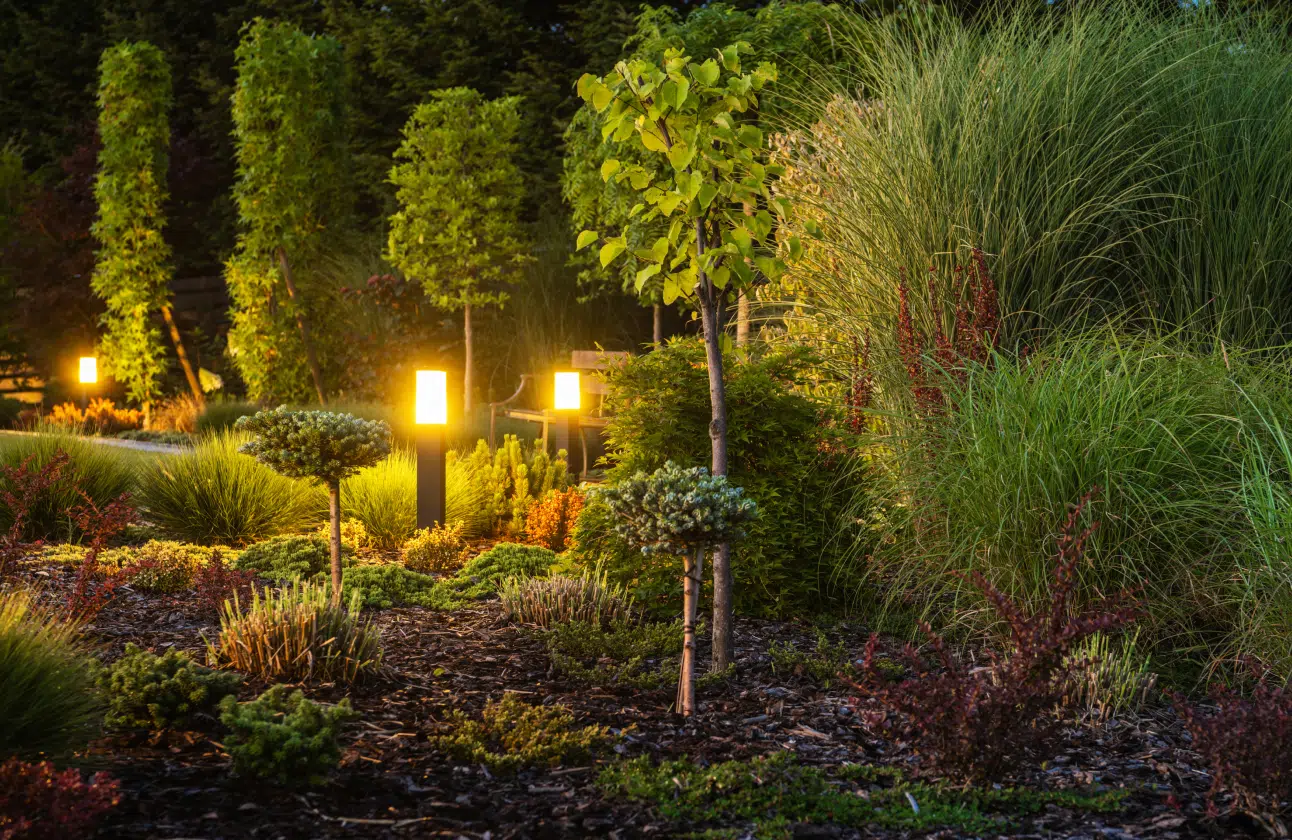
By late October, many homeowners across the GTA notice the same thing: the backyard they spent all summer enjoying is dark by the time they get home from work. Patios, gardens and pool decks that looked great in July disappear into shadow for most of the evening, and front walkways become harder to navigate safely. Thoughtful outdoor lighting changes that, extending the usable hours of a property while making it safer and more welcoming through the longest nights of the year.
Good lighting is not about adding as many fixtures as possible. The best results come from a plan that considers how a space is used, what deserves attention, and how the system will cope with an Ontario winter.
Start With How You Use the Space
Before choosing fixtures, it helps to walk the property after dark and note where light is actually needed. Front steps, walkways, driveway edges and side-yard gates are safety priorities, since these are the areas people move through in the dark. Seating areas, outdoor kitchens and dining spaces need softer, functional light so people can see without feeling like they are under a floodlight. Then there are the features worth highlighting, such as a mature tree, a stone wall, a water feature or the architecture of the house itself.
Homeowners exploring landscape lighting in Toronto often find that a layered approach works best. Rather than relying on one bright source, the design combines several gentle ones, each with a clear purpose. The result feels natural, reduces glare, and avoids the flat, washed-out look that a single wall-mounted floodlight tends to produce.
The Main Types of Outdoor Lighting
A few core techniques cover most residential projects. Path lights are low fixtures that cast light downward onto walkways and garden borders, guiding movement without shining into anyone’s eyes. Step lights are built into stairs or the risers of retaining walls, making changes in level easy to see. Uplighting places fixtures at ground level, aimed upward to show off the texture of trees, columns or stonework. Downlighting, sometimes called moonlighting when fixtures are mounted high in trees, creates a soft, dappled effect on the ground below, similar to natural moonlight.
Well lights, which sit flush with the ground, are useful in lawns and garden beds where a raised fixture would be a tripping hazard or get in the way of a mower or snow shovel. Under-cap lights tucked beneath the coping of a wall or the edge of a seat wall add a subtle glow that reads as part of the hardscape rather than as a separate fixture.
Colour Temperature and Glare
Modern residential systems almost always use LED fixtures, which are efficient and long lasting. The colour of that light matters. Warm white, in roughly the 2700K to 3000K range, tends to flatter stone, wood and plants and feels comfortable in a residential setting. Very cool, bluish light can make a garden look harsh and clinical.
Glare is the other common mistake. A fixture should light a surface, not the eyes of the people walking past it. Shielded fixtures, careful aiming and modest brightness keep the effect comfortable for the household and considerate to neighbours. Directing light downward wherever possible also limits the amount that spills into the night sky.
Designing for Ontario Winters
Lighting in the GTA has to handle freeze-thaw cycles, heavy snow and road salt. Fixtures made from solid brass, copper or high-quality powder-coated aluminum generally hold up better than lightweight plastic options, and they age more gracefully. Placement matters too. Path lights set right at the edge of a driveway or walkway are likely to be buried by plowed snow or knocked over by a shovel, so they are often set back slightly or replaced with step and wall lights in high-traffic areas.
Most residential landscape lighting runs on a low-voltage system, where a transformer reduces household current to a safer level for the outdoor wiring. Cables should be buried at a sensible depth and routed away from areas likely to be dug up later. Any new outdoor receptacle or line-voltage circuit should be installed by a licensed electrical contractor. Timers, photocells or smart controls let the system switch on at dusk automatically, which is especially handy as sunset times shift through the fall and winter.
Why Fall Is a Good Time to Plan
Autumn is a practical season to install or upgrade outdoor lighting. The ground is still workable before the deep freeze, garden beds have been cut back so fixture positions are easy to see, and the early sunsets make it simple to test aiming and brightness in real conditions. A system installed now will be ready for holiday gatherings and the long stretch of dark evenings that follow.
Lighting is one of the few landscape upgrades that delivers value every single day of the year. When it is planned around how a family actually uses its property, it makes the home safer, more inviting, and a lot more enjoyable after the sun goes down.
