

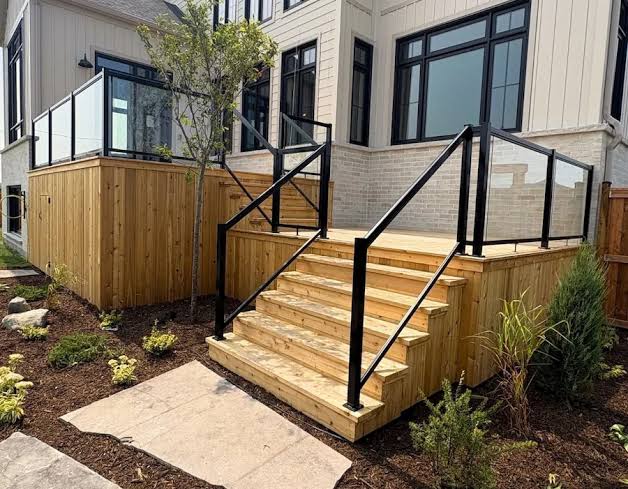
Railings are the part of a deck people touch, lean on and look through every time they step outside, yet they are often chosen last, almost as an afterthought. That is a missed opportunity. The railing shapes the view from the kitchen window, sets the style of the whole backyard and plays a big role in safety, especially for families with young children or pets.
In Toronto, railings also have to handle wind, snow, ice and strong summer sun. Glass, aluminum and wood each answer those demands differently. Here is how to weigh the options, along with the basic safety rules worth knowing before picking one.
Start With the Safety Basics
Railings on a deck are technically called guards, and Ontario’s building rules set out when they are required and how they must be built. As a general guide, a guard is usually needed once a deck’s walking surface is more than about 600 mm above the ground below. Guards must be tall enough and strong enough to resist people leaning or falling against them, and the openings within them are generally kept small enough that a 100 mm sphere cannot pass through, which helps keep small children from slipping through or getting stuck.
Residential guards are also generally expected to be non-climbable, which means avoiding horizontal rails or decorative pieces that a child could use as a ladder. Exact heights and details depend on how high the deck is and the type of building, so it is important to check with the City of Toronto, or the local municipality, before building or replacing a railing.
Glass Railings for Views and Light
Glass panels are the go-to option for decks that overlook a ravine, a garden or a pool, because they keep sightlines almost completely open. These systems use tempered safety glass set into aluminum posts, base shoes or discreet clamps. Frameless and semi-frameless designs give a clean, modern look that suits newer homes and updated older ones alike.
Glass also works well as a wind break, which is useful on higher decks and rooftop spaces where gusts can make it hard to enjoy the outdoors. The trade-offs are cleaning and cost. Glass shows water spots, pollen and fingerprints, so it needs regular washing to stay clear, and it is generally the most expensive of the three options.
Aluminum Railings for Low Maintenance
Powder-coated aluminum is one of the most practical railing materials for Ontario weather. It does not rot, rust or need painting, it shrugs off snow and freeze-thaw cycles, and the finish holds its colour for years with little more than an occasional rinse. Picket systems with narrow vertical balusters make it easy to meet the opening rules while still keeping a fairly open view.
Aluminum also comes in a range of colours, with black, white and bronze being popular choices that pair well with both wood and composite decking. Aluminum posts can frame glass panels too, which gives homeowners a hybrid option: glass where the view matters most and pickets along the sides. For anyone weighing up railing installation in Toronto, this mix is often the best balance between appearance, budget and upkeep.
Wood Railings for Warmth and Flexibility
Wood railings, usually in pressure-treated pine or cedar, remain popular because they are affordable, easy to customize and naturally match a wood deck. A carpenter can build almost any design on site and wood is easy to repair if a section gets damaged.
The catch is maintenance. Wood railings take more weather than the deck surface itself, since they are exposed on every side. Without regular staining or sealing they can grey, split and splinter, and top rails can become rough to the touch. Wood balusters also need to be spaced and fastened carefully so the openings stay within the required limits as the wood shrinks and moves over time.
Privacy, Kids, Pets and Matching the Deck
Different households have different priorities. Families with toddlers usually want vertical pickets or glass with no climbable features and solid, well-anchored posts. Dog owners may prefer glass or tightly spaced pickets so small pets cannot squeeze through. Where neighbours are close, a solid wood or composite section, or frosted glass, can add privacy without boxing in the whole deck.
It also pays to think about the deck as a whole. A composite deck looks best with railings that are just as low-maintenance, such as aluminum, glass or composite rail systems, so owners are not refinishing the railing while the boards stay clean. A cedar deck may look most natural with matching wood or a dark aluminum rail that lets the grain stand out.
Making the Final Choice
The right railing balances safety, view, upkeep and budget. Glass suits view-focused, modern spaces, aluminum delivers durability with very little care, and wood offers warmth and design freedom for owners who do not mind maintenance. Whatever the choice, the railing should be properly anchored into the deck framing rather than simply screwed to the surface boards, since a guard is only as strong as its connections.
Before ordering materials, confirm the local rules for height and openings, ask how the posts will be attached, and look at finished examples in person if possible. A well-chosen railing makes a deck safer and more enjoyable for many seasons.
