

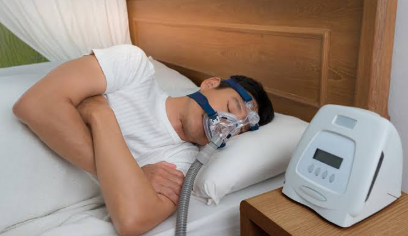
Those with obstructive sleep apnea may find it challenging to get a good night sleep. This condition leads to our airway being blocked or narrowed time and again during bedtime, which disrupts normal breathing. One treatment widely used, which is recommended and is often prescribed is the CPAP (continuous positive airway pressure) machine to assist with keeping the airway open and aid more normal breathing at night.
CPAP is an abbreviation of continuous positive airway pressure. Pressurized air using a tube and mask is delivered to the patient by the machine thus preventing the airways to collapse when sleeping. In the opinion of many individuals, symptoms of sleep apnea and sleep quality could be controlled by the constant use of appropriate equipment to address the problem.
How Does a CPAP Machine Work?
The CPAP machine pulls the air in and pressurizes it to the set specifications and delivers the air through a mask attached to it. Breathing stops during sleep caused by obstruction of the breathing passage, which is minimized by the airflow so that there is no intervening of the breathing process in obstructive sleep apnea.
Current CPAP devices can also have comfort options that provide ease of care. Others have a ramp feature, which will slowly raise pressure to the desired amount when a user sleeps. Others provide relief during exhalation or humidification that help to decrease the dryness of the nose and mouth.
Automatic CPAP machines also called APAP devices are able to act on breathing patterns to change pressure in the predetermined range. CPAP machines that are fixed-pressure provide a fixed prescribed pressure. This will require a different choice based on the diagnosis and treatment regimen.
Different Types of CPAP Machines
To pick a machine, it is essential to know the primary types.
Fixed-pressure CPAP machines: these provide a single preset pressure of air during the night. They can fit individuals whose care entails a constant pressure level.
Manual CPAP machines require modification of pressure within a range provided by the doctor based on the change in breathing requirement. This can provide flexibility to some users, yet settings must be derived by use of proper medical advice.
Travel CPAP machines are smaller in size and easy to transport. They may be helpful in individuals who travel often either to work or tour and wish to carry on with their therapy even when they are away at home.
Inhalation and exhalation occur at different pressure levels in BiPAP machines. They can be prescribed when the clinical needs of a person involve the use of bilevel pressure support, as opposed to the standard CPAP therapy.
These devices are used to serve various functions hence the best option to use cannot be influenced by the sight or just the cost.
Choosing the Right CPAP Mask
The mask makes a crucial component of the CPAP system since it provides pressurized air to the wearer. An effective fit can bring much to the treatment overall.
Nasal masks are worn over the nose, whereas nasal pillows masks have small cushions that are placed at the nostrils. Full face mask is also used to cover both nose and mouth and may be used by individuals who may habitually use mouth to breath during sleep.
There are parameters such as type of sleep, shape of face, breathing patterns, and skin sensitiveness when deciding on which type of mask to wear. An ill-fitting mask may result in the leakage of air, irritation, and disturbances in sleep. An adept CPAP provider will guide you towards a suitable style and size.
Maintaining Your CPAP Equipment
These are routine maintenance to ensure that your CPAP and accessories are on good shape. Disinfect the mask, tubing and humidifier parts in compliance with the directions of the manufacturer. Filter checks and look at the equipment to show any changes or evidence of damage.
Do you feel continuously dry or leaking air or uncomfortable, consult your provider of CPAP. The mask can be re-adjusted or a more comfortable alternative can be taken. Do not alter pressure settings without a professional.
Finding a CPAP Machine That Suits Your Needs
Obstructive sleep apnea treatment may include a CPAP unit that is dependent upon individual treatment needs. Look into the type of the machine, whether it will work with the mask, the possibility of humidification, maintenance, warranty, and how easy the machine is to use, whether one can find extra supplies to replace parts.
Talk to an experienced medical practitioner or CPAP supplier to make sure that the equipment is appropriate to your predetermined treatment. CPAP therapy can be made a more manageable aspect of your nighttime regimen with the help of an appropriate machine, a comfortable mask and consistent use.
