

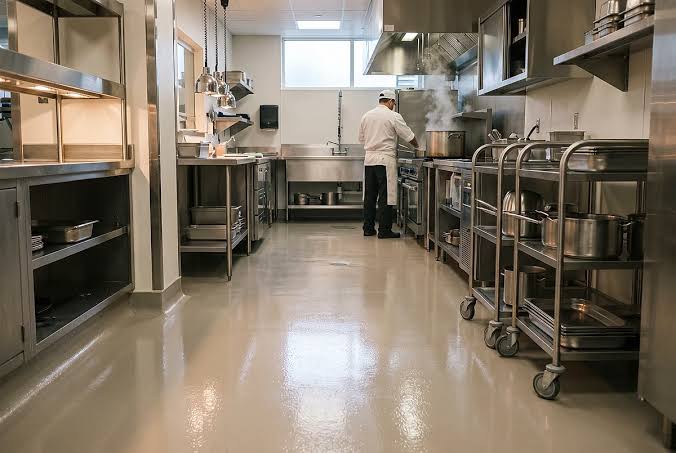
Few floors take as much punishment as the one behind a restaurant line. In a busy Miami kitchen it is splashed with boiling water, scrubbed with hot detergents, coated in grease, dusted with flour, and crossed by staff in a hurry from morning prep to the final washdown. A floor that looks fine in a dining room can crack, peel, or turn slick within months in that environment.
Choosing the right kitchen floor is less about appearance and more about how the material responds to heat, chemicals, water, and constant traffic. Understanding those stresses helps owners and operators ask better questions before a renovation or a new build-out.
Thermal Shock: The Stress Most Floors Are Not Built For
Kitchens swing between temperature extremes many times a day. A steam kettle is drained across the floor, a combi oven vents near its base, hot sanitizing rinse water spreads toward a drain, and the walk-in cooler door opens onto the same surface. Each sudden change makes the floor expand or contract quickly, and the concrete beneath moves at a different rate than the material on top.
Materials that cannot keep up with that movement develop hairline cracks and eventually lose their bond. Thin-film coatings are especially vulnerable because they have little mass to absorb the change. Once water finds a crack, it can travel beneath the surface, and the damage spreads faster than it appears.
Grease, Food Acids and Harsh Cleaners
Kitchen floors also face a steady mix of chemicals. Animal fats and cooking oils soak into unprotected concrete. Citrus juice, vinegar, tomato products, wine, and dairy are acidic and can etch weaker surfaces over time. Degreasers and sanitizers used at closing add their own chemical load, often applied hot.
A good kitchen floor has to resist all of this without softening, staining, or breaking down. It also needs to be non-absorbent, because anything that soaks in becomes a source of odor and a place for residue to linger. Health inspectors generally look for floors that are smooth, durable, non-absorbent, and easy to clean, so a surface that holds grease in its pores tends to draw attention.
Why Urethane Cement Is Often the Choice
Urethane cement, sometimes called urethane concrete, is a heavy-duty system that combines a polyurethane binder with cement and aggregate. It is installed much thicker than a typical epoxy coating, and its chemistry lets it tolerate rapid temperature changes that would stress a rigid film. That is why it is often specified for commercial kitchens, food processing rooms, and breweries where hot washdowns are routine.
Standard epoxy still has a place in many commercial buildings and works well in dry storage, front-of-house areas, and rooms without hot water or heavy steam. On the cooking line and in the dish area, however, many operators find urethane cement holds up better. Its tolerance for moisture in the slab is another advantage in South Florida, where concrete rarely stays fully dry. Owners researching urethane cement flooring in Miami will find that installers usually recommend it for those hot, wet zones while using other systems elsewhere in the building.
Slip Resistance, Cove Base and Drainage
A kitchen floor spends much of its life wet or greasy, so traction matters as much as durability. Resinous systems can be installed with aggregate broadcast into the surface to create texture. The right level is a balance: rough enough to help staff keep their footing, smooth enough to clean properly at the end of each shift.
Two design details make a large difference over the years. An integral cove base carries the flooring up the wall in a smooth curve, removing the sharp corner where water, grease, and debris collect. Proper slope to floor drains keeps water from pooling in low spots, which reduces slip hazards and limits the time moisture sits on the surface. Both are far easier to get right during installation than to correct afterward.
Maintenance That Extends the Life of the Floor
Even a well-built kitchen floor benefits from consistent care. Daily cleaning with a deck brush or auto scrubber, using a degreaser suited to resinous floors, prevents buildup in textured surfaces. Squeegeeing water toward drains instead of letting it dry in place keeps the floor cleaner and safer.
It also helps to watch for early warning signs: small chips where heavy equipment is dragged, wear at doorways, or gaps where the cove base meets the wall. Repairing those spots promptly with compatible material is far simpler than waiting until damage spreads beneath the surface.
Planning the Floor Around the Kitchen
The longest-lasting kitchen floors are planned around how the space actually operates. Where the hottest water lands, where carts roll, where grease falls, and how the floor is cleaned all shape the right system and texture. Testing the slab for moisture and preparing the concrete properly matter just as much as the material itself.
For Miami restaurant owners, where heat, humidity, and long service hours are part of daily life, a floor designed for those conditions means fewer disruptive repairs and a safer workplace for the team that keeps the kitchen running.
