

For most homeowners, the garage floor is the least considered surface in the house. It gets parked on, spilled on, swept occasionally, and otherwise ignored until a stain refuses to come out or the concrete starts to dust and flake. In South Florida, that neglect tends to show up faster than it would in a drier climate. Heat, humidity, salt air, and sudden summer downpours all work on bare concrete every day, and a garage that doubles as a workshop, gym, or storage room takes even more punishment.
Choosing a coating for that floor is less about picking a color and more about understanding the conditions the floor has to survive.
Moisture Is the First Thing to Understand
Concrete looks solid, but it is porous. Water vapor moves up through a slab from the ground below, and in areas with a high water table and frequent rain, that movement can be significant. When a coating is applied over a slab that is pushing out moisture, the vapor can collect beneath the film and lift it from the surface. The result is bubbling, peeling, or white haze under the finish, often within the first year or two.
This is why experienced installers test for moisture before they open a single can of product. Simple tests can show whether the slab is releasing more vapor than a given coating can tolerate. If it is, the plan may need a moisture-mitigating primer or a different system altogether. Anyone researching garage floor coating in Miami will find that a reputable contractor talks about moisture early in the conversation, not as an afterthought once problems appear.
Heat, Sunlight, and Hot Tires
Florida garages often sit with the door open for hours, letting direct sun reach the front portion of the floor. Some traditional epoxy formulas are not UV stable, which means they can yellow or chalk over time where sunlight hits them.
Heat brings a second issue known as hot tire pickup. When a car is driven on hot pavement and then parked on a coated floor, the softened rubber can grip the coating as it cools and pull it away when the car leaves. Thin, low-quality coatings and poorly prepared surfaces are the most vulnerable. Higher-build systems with proper bonding are far more resistant, and many installers now use a polyaspartic or polyurethane topcoat to add UV stability and hardness on top of an epoxy base.
Surface Preparation Matters More Than the Product
It is tempting to compare coatings by brand or by the number of layers, but most failures trace back to preparation. Concrete needs to be cleaned of oil and grease, cracks and spalls need to be repaired, and the surface needs to be opened up so the coating can grip it. Professional crews typically use diamond grinding to create that profile, which removes weak surface material and leaves a texture the primer can penetrate.
Do-it-yourself kits often rely on acid etching instead. Etching can work on some floors, but it is harder to control and does not remove sealers or contamination as reliably as grinding. When a store-bought kit peels within months, the cause is usually the prep, not the product.
Choosing the Right System for How the Garage Is Used
There is no single correct coating for every garage. A few common approaches each have their place:
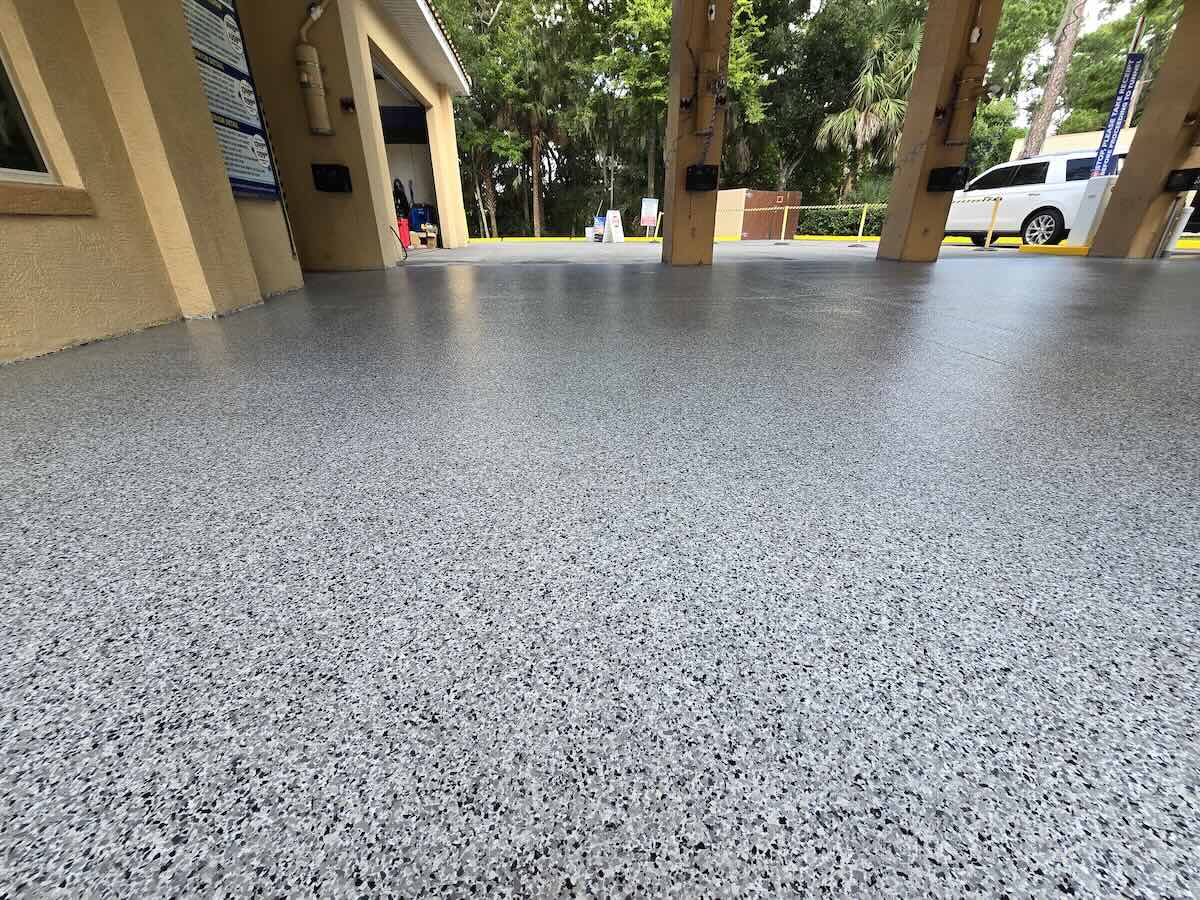
- Epoxy with decorative flakes is a popular choice for residential garages. The flakes hide minor imperfections, add texture for grip, and make dust and small stains less visible.
- Polyaspartic systems cure quickly, often allowing a garage to return to use sooner, and generally hold up better in sunlight than standard epoxy.
- Metallic epoxy creates a glossy, marbled look that suits showroom-style garages, though it can be more slippery and shows scratches more readily.
Slip resistance deserves attention in a humid climate. Floors that track in rainwater or pool water can become slick, so many owners add a fine aggregate to the topcoat.
Maintenance and Realistic Expectations
A well-installed coating is low maintenance, but not maintenance free. Regular sweeping keeps grit from dulling the finish, and occasional mopping with a mild cleaner removes the salt residue and road film that build up near the coast. Harsh solvents and abrasive pads should be avoided unless the manufacturer says otherwise.
Homeowners should also be realistic about lifespan. Coating life depends on the system chosen, the quality of the prep, and how the space is used. Asking an installer to explain the specific layers, the expected cure time, and what is covered under any workmanship guarantee is a reasonable step before signing off on a project.
A garage floor coating done thoughtfully can turn a dusty, stained slab into a clean and durable surface that suits the South Florida climate. The key is treating the work as a system, starting with the concrete underneath, rather than as a quick coat of paint.
