

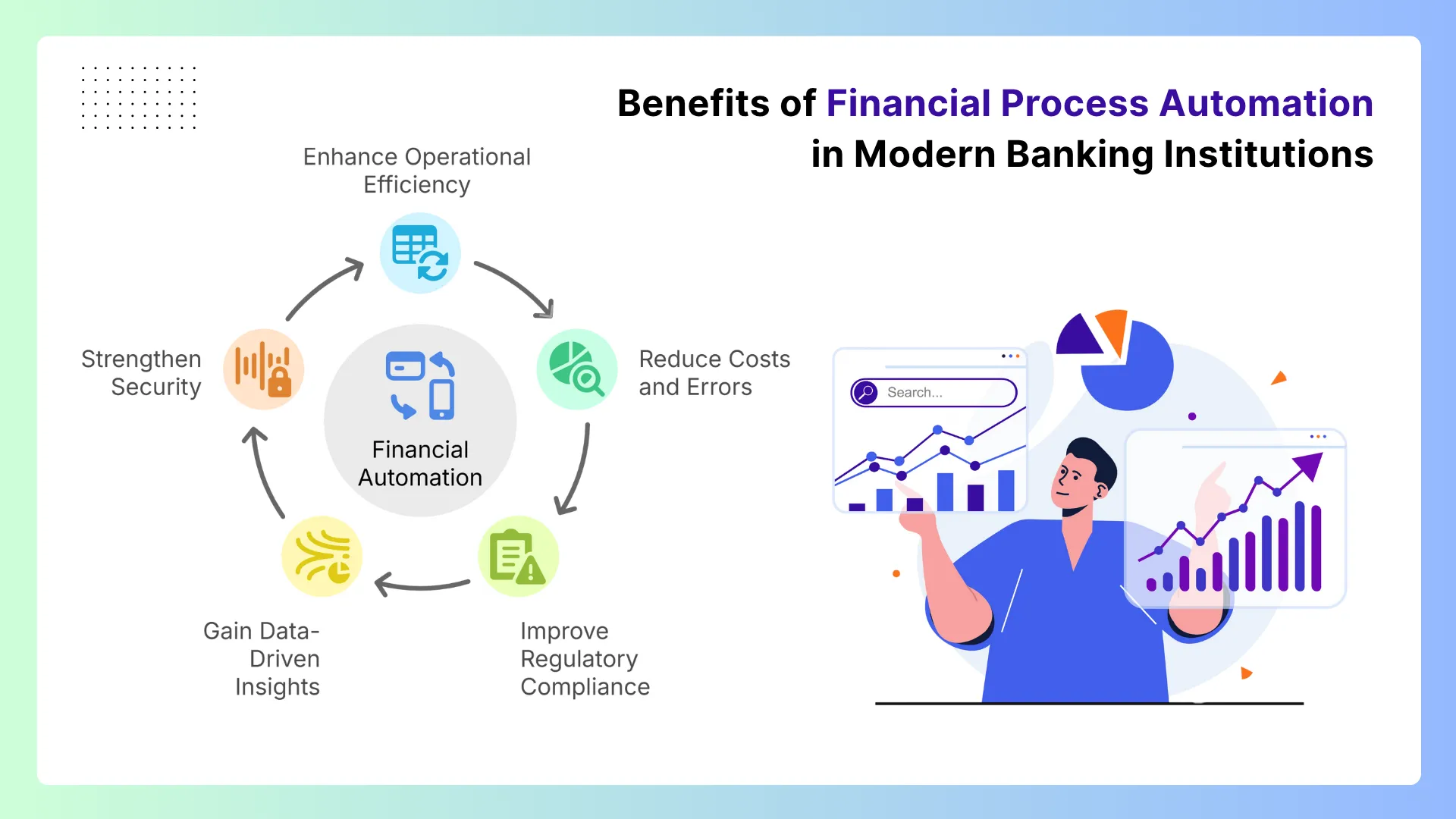
Automation has become one of the most important operating themes across financial services. Banks, brokers, payment providers, wealth platforms and fintech companies are all looking for ways to remove repetitive work, speed up decisions and offer customers faster service. The attraction is easy to understand: a well-designed automated process can operate continuously, handle large volumes of information and reduce the time employees spend on routine tasks. Yet the strongest financial automation strategies are not built around speed alone. They are built around trust.
That distinction matters because financial services are different from many other digital industries. A slow movie recommendation is annoying, but a delayed withdrawal, an unexplained account restriction or an incorrect identity check can immediately affect a person’s access to money. As firms introduce more automated workflows, the question is no longer simply whether a process can be automated. The better question is whether it can be automated without making the customer feel that accountability has disappeared.
This tension is already visible across brokerage and fintech operations. A recent FinanceFeeds analysis of broker automation and client trust highlights how automation is moving into onboarding, payments, compliance, risk management and support. These are areas where faster processing can improve the customer experience, but they are also areas where exceptions inevitably occur. The quality of the escalation process often matters as much as the quality of the automated decision itself.
Consider customer onboarding. Automation can compare identity documents, verify data and screen applications more quickly than a purely manual process. For the majority of straightforward cases, that is valuable. Problems emerge when an application falls outside the expected pattern. A name may be transliterated differently across documents, an address may not match a standardized database, or a legitimate customer may trigger a rule designed to identify risk. If the system only returns a rejection with no useful explanation, the efficiency gain can turn into frustration.
The same principle applies to customer service. Artificial intelligence can summarize conversations, route tickets and answer common questions. Used well, that can shorten response times and make service teams more productive. But customers should still have a clear path to a person when the issue is unusual, high value or emotionally sensitive. Automation is most useful when it removes unnecessary friction, not when it creates a wall between the company and the customer.
Payments are another important test case. Financial platforms increasingly compete on how quickly customers can deposit, withdraw, transfer and use funds. FinanceFeeds has reported on how firms are extending financial platforms into broader payment functionality, including the launch of a virtual payment card linked to a trading account. As trading, payments and account services become more connected, operational reliability becomes central to the customer relationship. A convenient feature only creates long-term value if users believe that transactions will be processed accurately and problems will be resolved.
For financial firms, the practical lesson is to design automation around three layers: routine processing, exception detection and accountable escalation. Routine cases should be handled quickly. Exceptions should be identified rather than forced through the same workflow. And customers should know what happens next when a decision needs review. This approach allows firms to gain efficiency without treating every customer interaction as identical.
Governance is equally important behind the scenes. Companies need to know which data an automated system uses, who can change its rules, how performance is monitored and how errors are investigated. The increasing role of artificial intelligence in regulatory processes also makes this relevant to compliance. The growth of AI-driven RegTech tools shows how onboarding, due diligence and monitoring are becoming more automated, but those systems still require controls, documentation and human responsibility.
The most successful financial automation may therefore be almost invisible to the customer. It should make ordinary tasks faster while making unusual problems easier to identify and resolve. Customers do not need to know every technical detail behind a decision, but they do need confidence that the company can explain what happened and correct mistakes when necessary.
As automation becomes standard across the industry, speed alone will become less differentiating. Many competitors will be able to offer instant checks, automated support and streamlined workflows. Trust, transparency and the quality of exception handling may become the factors that separate systems customers are willing to rely on from systems they merely tolerate. In financial services, automation should not replace accountability. Its strongest role is to make accountable organizations work better.
